When Life Changes Faster Than Your Nervous System Can Keep Up
Life transitions have a way of arriving all at once. A move. A breakup. A new role. A loss. A beginning you wanted but didn’t expect to feel this destabilizing.
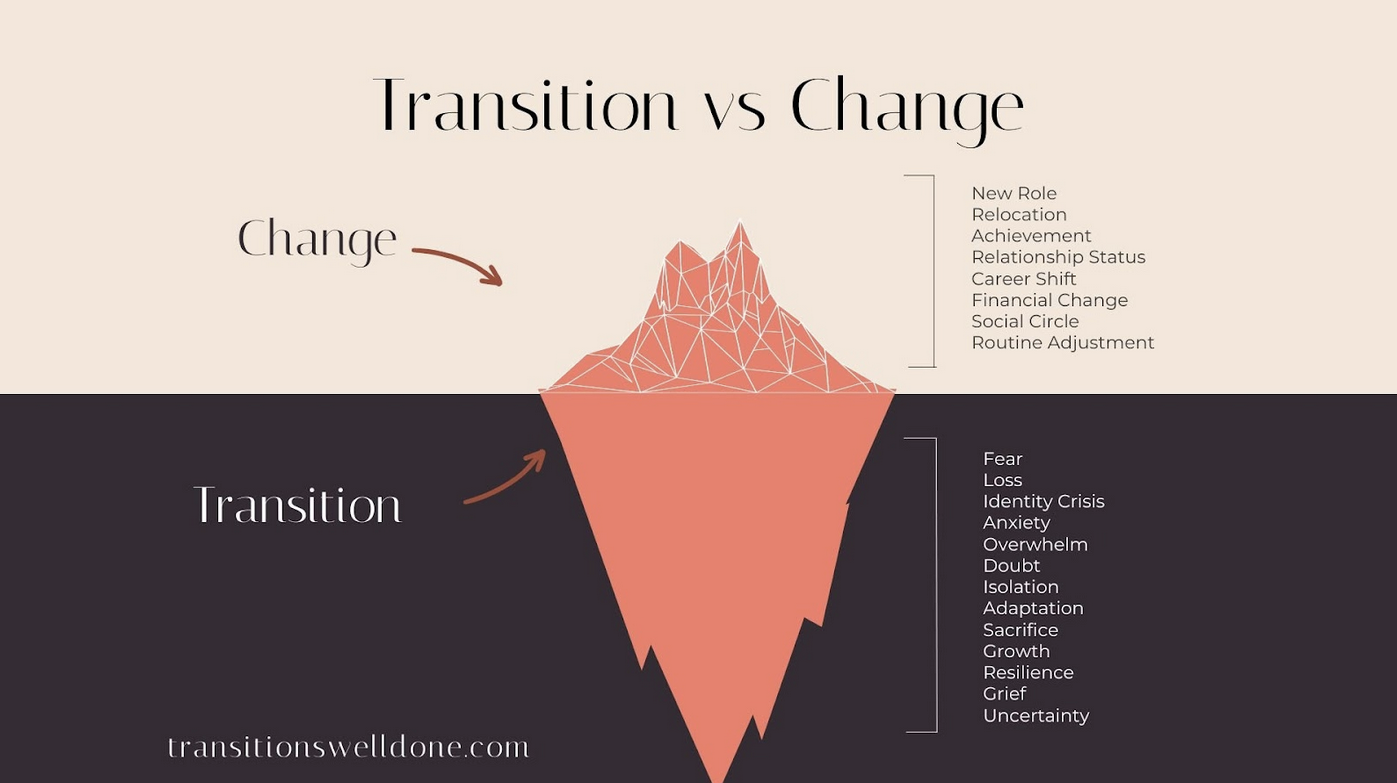
Even when the change is “positive,” your nervous system may still feel overwhelmed, anxious, or untethered. Many people come to therapy during life transitions not because something is “wrong,” but because their internal world hasn’t caught up to what’s happening externally.
Why Life Transitions Feel So Overwhelming
Major life transitions disrupt routines, roles, relationships, and identity. Your nervous system is wired for predictability, and when change happens quickly, your body may respond with:
Heightened anxiety or emotional reactivity
Trouble sleeping or focusing
A sense of urgency or paralysis
Feeling disconnected from yourself or others
This is not a failure to cope. It’s a normal physiological response to uncertainty.
Therapy for Life Transitions: Support Beyond Self-Help
While journaling, mindfulness, and podcasts can be helpful, therapy offers something different: co-regulation, reflection, and containment during periods of uncertainty.
Individual therapy for life transitions provides space to:
Slow down your internal experience
Understand your emotional and nervous system responses
Grieve what’s ending while making room for what’s emerging
Develop tools for grounding, regulation, and decision-making
At Inward Motion Counseling Group, our trained therapists support individuals navigating transitions with care that honors both emotional depth and practical stability.
Virtual Therapy in Oregon and Hawaii
Our individual therapy services are available virtually to clients in Oregon and Hawaii, allowing you to receive consistent support wherever life has taken you.
Transitions don’t need to be rushed, and you don’t have to navigate them alone.
👉 Book a free consultation to explore individual therapy for life transitions with a trained therapist.